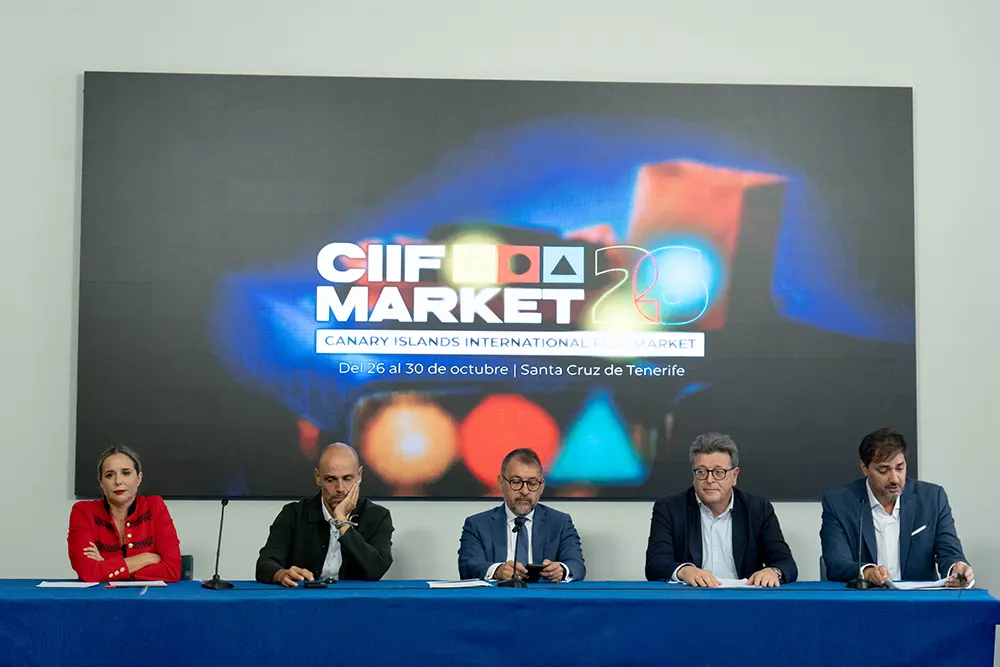
CIIF Market 2026 brings together Mabel Lozano and Inés Rodríguez for the screening of *Abril, hoy no es invierno*

A short documentary film, now being adapted into a feature-length fiction film currently in production in Tenerife, starring Michelle Jenner and Luis Tosar.
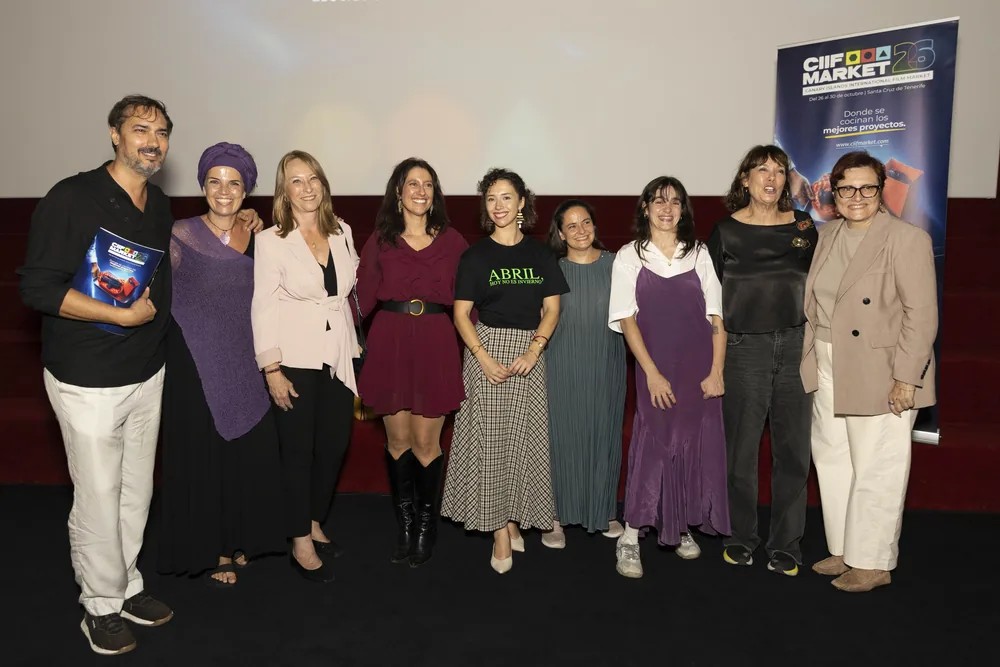
Santa Cruz de Tenerife, October 28, 2026. Last night, as part of CIIF Market 2026, the short documentary film *Abril, hoy no es invierno* (“April, It’s Not Winter Today”) was screened at Espacio Price. Written and directed by Mabel Lozano, the film gives voice to a silenced reality: the violence and sexual exploitation faced by women with disabilities. The session, presented by journalist Elena Falcón, was attended by the director, actress Inés Rodríguez (from Tenerife), and representatives from Canarian institutions dedicated to equality and social action.
Following the screening, Falcón spoke with Mabel Lozano and Inés Rodríguez—who plays the role of Abril in the feature film (based on a short film) currently being shot in Tenerife. Lozano explained that she was initially hesitant to bring this story to the screen when Ángeles Blanco, a lawyer for the ASPACE Confederation, first told her about Abril’s case; she felt she “needed to keep some distance from such harrowing stories” and feared “falling into the trap of exploiting others’ pain.”
The director highlighted the lack of awareness surrounding sexual violence against women and girls with cerebral palsy. “That is why cinema is so important and powerful—it gives a voice to women like Abril,” she noted.
Inés Rodríguez highlighted the importance of addressing a topic like this and bringing visibility to the situation of sexual abuse and exploitation experienced by many women with cerebral palsy.
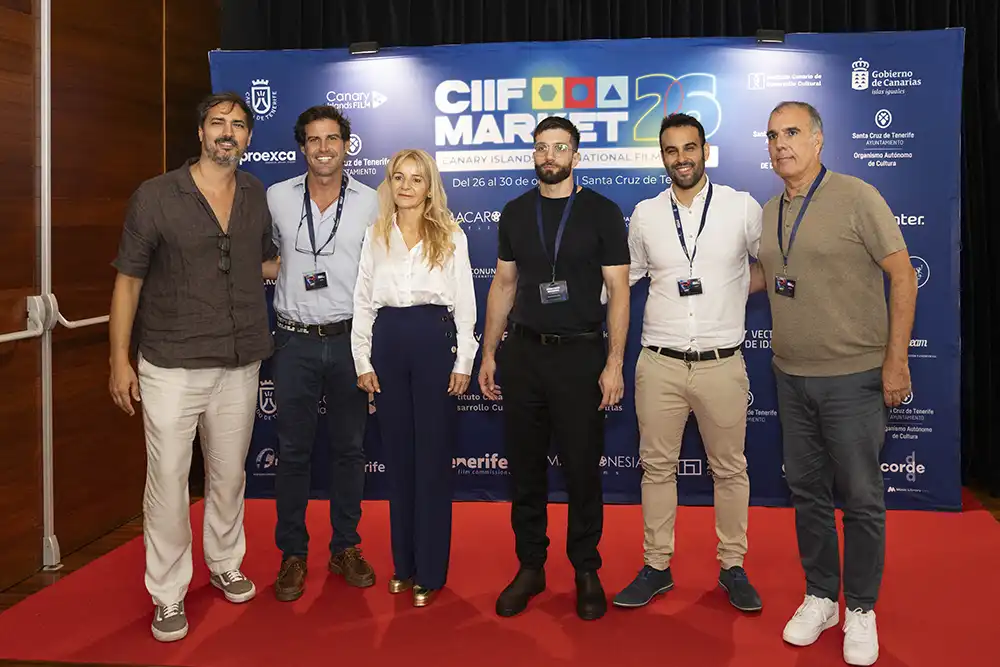
With this screening, CIIF Market 2026 reinforces its support for cinema made and filmed in the Canary Islands—work that showcases audiovisual talent, boosts the activity of production companies, and cements the archipelago as a hub for creation and production. “At CIIF Market, we wanted to screen this short film by Mabel to bring visibility to such an important work and subject matter. The fact that this also coincided with the filming of her feature-length movie in Tenerife—and that we were able to have both Mabel and Inés present—was a real treat,” noted CIIF Market director Willy Ríos.

*Abril, hoy no es invierno* (“Abril, Today Is Not Winter”) reconstructs the true story of Abril, a woman with cerebral palsy who was subjected to sexual exploitation for years—a case that was ultimately dismissed because she was unable to communicate with the justice system. Ángeles Blanco, a lawyer for ASPACE, received her plea for help and maintained contact with her for eight months until she was finally located; Abril had been able to communicate only through the use of emoticons.
Lozano emphasized that this is not an isolated case; the documentary itself concludes with a striking statistic: 84.09% of women and girls with cerebral palsy have experienced sexual violence since childhood. Today, Abril lives under state guardianship, and her abusers are not in prison. Until 2022, no form of communication other than the complainant’s own verbal testimony was admissible in court; although such alternative communication is now permitted—provided it is supported by a speech therapist—the victims themselves must bear the cost. “Without resources, there is no justice,” the director concludes.
To conclude the event, Ana Padrón Brito, Director of the Canary Islands Institute for Equality (ICI); Yolanda Baumgartner, Island Director of Social Action for the Cabildo of Tenerife; and Candelaria Delgado, Minister of Social Welfare, Equality, Youth, Childhood, and Families for the Government of the Canary Islands, joined the discussion.
Padrón Brito argued that the commitment of the ICI goes beyond preventing and eradicating gender-based violence; it also entails bringing such violence to light. She highlighted the role of public authorities in supporting cultural projects that expose forms of violence that otherwise remain hidden. Candelaria Delgado underscored the work being carried out by the Government of the Canary Islands, the role of cinema in making this violence visible, and the need for resources to support victims. Meanwhile, Yolanda Baumgartner explained the initiatives being undertaken in this area by the Cabildo of Tenerife.
Mabel Lozano chose to conclude the event by sharing her intention to return to the Canary Islands in about a year’s time to present the film to the local audience.
From short documentary to feature-length fiction film
The feature film—based on the short film and currently being shot in the capital of Tenerife—stars Michelle Jenner and Inés Rodríguez, with a cast that also includes Luis Tosar, Javier Gutiérrez, Antonio de la Torre, and Rossy de Palma, among others. It is a production by Abril, hoy no es invierno S.L., Mafalda Entertainment, Riverflow Pictures, and Álamo Producciones Audiovisuales. Mabel Lozano serves as creator, screenwriter, director, and executive producer, working alongside producer Eduardo Campoy—who, in 2024, received the CIIF Market Award from the Santa Cruz de Tenerife Development Society (Sociedad de Desarrollo de Santa Cruz de Tenerife) in recognition of the market’s 20th anniversary.
Written by Eva Pauné and the director herself, this social thriller explores the communication difficulties and barriers to accessing justice that women with disabilities face when subjected to violence and abuse. The plot begins with a plea for help received on a foundation’s phone line, triggering a race-against-time search. The soundtrack is composed by violinist Ara Malikian. Following a five-week shoot across Guadalajara, Madrid, and Tenerife, the film is wrapping up production on the island, where Jenner, Rodríguez, and Tosar are concluding their work.
Tenerife is the final stop for the shoot, and the technical crew working on the island consists of professionals from the Canaries, with women heading up the various departments. Lozano values the experience and training of these local technicians, who are accustomed to working on both national and international productions.